
Building Human and Social Capital in the Community

by Lisa Stoddard

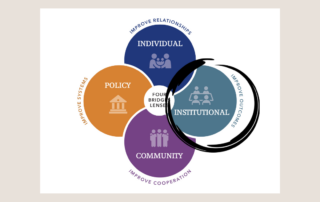
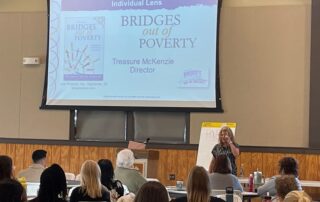
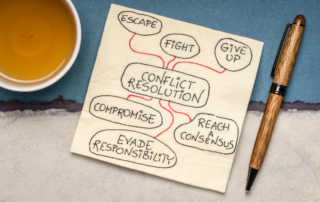
It’s so difficult to get our collective “head” around the issue of poverty because it’s such a complex issue. One of the ways that we began to develop a better understanding of the complexity of the issue of poverty was by trying to think of our work in terms of how it applies to the four areas into which a vast majority of the research about poverty falls. After surveying all of the poverty-related research out there, aha! Process found that there were really four major causes of poverty. In Bridges Out of Poverty those causal areas are (1) behaviors of the individual, (2) human and social capital in the community, (3) exploitation, and (4) political/economic structures.

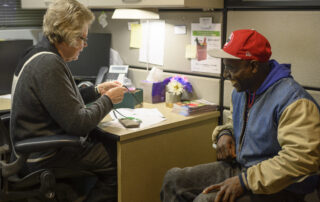
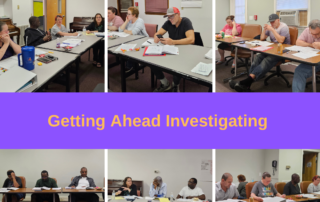
The most common area of focus among human service organizations is the first one—behaviors of the individual. At Community Action Partnership (CAP), we’ve found that just focusing on helping our program participants learn new behaviors isn’t enough. We also have to address human and social capital, issues of exploitation, and the political and economic structures that exist. One of our projects is called “Bridges to Work.” This project is focused on developing skills with both entry-level employees and their supervisors in order to increase retention and the opportunity for additional training, advancement, and income. We’ve found that we can have the greatest impact if we give entry-level employees and their supervisors a shared understanding. To that end, we use information from Getting Ahead in a Just-Gettin’-By World with entry-level workers as part of a comprehensive course to help them “do better” at work.

Causes of Poverty 5-15-13 6-25Additionally, we provide a poverty simulation and Bridges training to supervisory staff. Feedback from employers is that this is an eye-opening learning experience for them. One employer described his change in mindset as moving from “what is wrong with this employee” to “let’s see what we can do to help this employee retain his job” because he now had a better understanding of the issues. Bridges is one of the tools that are allowing us to help both employees and employers develop more beneficial strategies for mutual success. CAP is changing mindsets, and these changes are impacting workers and businesses alike.

Recently we received a letter from the human resources manager at one of the businesses that participated in a poverty simulation and Bridges Out of Poverty workshop. He said:

“We actually reconnected with a former employee at the training who we had terminated previously for poor attendance and all kinds of other issues that were creeping into the workplace. We saw the progress that she had made in this program [Bridges to Work], and after gaining a better understanding of her frame of reference at the time, we decided to give her another chance. This required overturning a ‘no rehire’ status, which we rarely, if ever, do. Since graduating this program and starting back up with us, she has been a stellar employee, and we are currently transitioning her to a team lead. We have also decided to change our long-standing policy based on this experience so that anyone who left us with a no-rehire status could come back as long as they completed this program successfully.”

Because of the complexity of the issue of poverty, our approach has to be multi-pronged and multi-dimensional. Developing a shared understanding of the issue is the first step in engaging our entire community in figuring out how to have a real impact on poverty at the local level.

Lisa Stoddard has worked in Community Action for the past 18 years, serving as the executive director of a community-based, non-profit community action agency for the last eight of those years.  She has a degree in English with a secondary education emphasis from the University of Montana, is a Certified Community Action Professional (CCAP) and a Bridges Out of Poverty certified trainer.

Bridges, Community

Working with Parents Effectively

by Sue Nelle DeHart

When working with your students’ parents, certain steps make communication smoother and more effective.

1.   It is important when working with parents not to think of them as a single group but as distinct subgroups. For example:

  • Career-oriented/too busy (these are parents who respond well to social media)
  • Very involved
  • Single parents
  • Immigrant parents
  • Parents with overwhelming personal issues
  • Surrogate parents (more than eight million children are being raised by
  • grandparents)
  • Children who are their own parents (this may involve parents who are mentally or physically ill, incarcerated, struggling with addiction, etc.)

Many discipline problems come from those students whose parents have overwhelming personal issues and students who function as their own parents. These students desperately need relationships with adults that are long term and stable.

It is unrealistic to treat parents as one group. The needs and issues are very different. In your campus plan, identify specific ways you will target each group.

2.    It is important that we listen to parents. We must really understand what they are telling us and where they are coming from instead of trying to make them understand our position.

3.    We need to remember that our parents are very good at reading non-verbals. If the words coming out of our mouths are not congruent with our body language, they will not trust us.

4.    Remember that parents do not like to be surprised about their children’s poor grades on their report cards. If we let parents know about how the students stand three weeks into the grading period, they have time to help their children bring their grades up.

Working with Parents InfoWe, as parents, don’t like for our children to get grades like 78 or 89 on their report cards. We think, Isn’t there anything the students can do to raise their grades one or two points? Ruby said that we should base 80% of the student’s grade on how well he/she understood the content and 20% on whether he/she had a plan and worked the plan. If we figured out ways to assign grades to his/her plan, the student could earn a few points that could raise the grade from a C (78) to a B (80) or raise a B (89) to an A (90).

5. You don’t have to do it alone. There are great resources out there to help as well. Ruby has a book called Working with Parents that is a must-read for teachers and administrators alike. Ruben Perez has a DVD called Welcome to U.S. Schools: A Guide for Spanish-Speaking Immigrant Parents that is the best I have ever seen. It is in Spanish with English subtitles. Ruben shares information with parents about the grading system in American schools, attendance policies, and how important it is that students do not translate in parent meetings.

What are some effective ways you use to work with parents in your school?


Uncategorized

A Recipe for Lemonade: Common Core State Standards

Teresa A Johnson

Teresa A Johnson

By Teresa Johnson

INGREDIENT #7 (Final Ingredient): Common Core State Standards

Common core: The final ingredient that makes the recipe just right!

The Common Core State Standards appear to be here to stay—at least for some time. During the last several months I have read many varying opinions about these standards. Regardless of opinions, it appears states are going to try these standards, as more than 40 have adopted them.

What is my opinion? Well, as a teacher of the gifted, I feel the combination of common core standards, universal concepts, the poverty framework, technology, and 21st century skills makes the perfect recipe for a successful classroom experience. Regular program content standards for high ability and gifted students were very grade specific, were not common across all three middle grades, and provided varying levels of challenge and depth per grade. The Common Core State Standards provide application, analysis, creativity, and evaluation that will be common across all three middle grades.

Common CoreI know there may be trepidation among regular program teachers in working with common core standards. Questions such as How will I…? Where might I find…? What if some of my students…? and How will I make the standards make sense to my students? are great questions to which school district leaders must try to provide the answers. Substantive, ongoing professional development sessions addressing the whole school picture will be the most meaningful to educators working in today’s school environment. The “whole school picture” professional development would include information on educating the whole child as well as information on implementing the Common Core State Standards for a successful school experience for both educators and students.

Suggested reading material helpful in providing information on whole child education:

The foundation:

  • A Framework for Understanding Poverty (Payne, 2013)
  • Removing the Mask: How to Identify and Develop Giftedness in Students from Poverty (Slocumb & Payne, 2010)

Other suggested reading:

  • Understanding Learning: The How, The Why, The What (Payne, 2002)
  • From Vision to Action (articles written by practitioners, Bazata et al., 2013)
  • Researched-Based Strategies (Payne, 2009)
  • The Parallel Curriculum (Tomlinson et al., 2002)
  • Understanding by Design (Wiggins & McTighe, 2005)
  • Teaching Culturally Diverse Students (Ford & Milner, 2005)
  • The Essential 55 (Clark, 2003)
  • Jacob’s Ladder (VanTassel-Baska & Stambaugh, 2011)
  • Understanding Common Core State Standards (Kendall, 2011)
  • Professional Learning Communities at Work (DuFour & Eaker, 1998)

Suggested website:

In my experience, success with common core and extensive knowledge of the whole student are interdependent. The suggested reading material will provide a roadmap to school success in today’s environment.


Uncategorized

When Discipline Issues Are Emotional Issues: Part 2

 When Discipline Issues Are Emotional Issues: Part 2

By Ruby K. Payne.  Part 2 of 2
As published in Middle Ground Magazine.
Copyright © 2013 Association for Middle Level Education

The Toxic Triangle

Safety and belonging in the middle grades school can become jeopardized by what is sometimes termed the toxic triangle (Figure 1). In middle grades schools, students are beginning the process of adult socialization. They learn their emotional patterns of interaction from the environments both outside and inside the school. The triangle illustrates the lack of boundaries young adolescents may encounter as they try to find their “place” in schools. This lack of boundaries—a threat to safety and belonging—stems from the fact that the students are learning where they “fit,” and that the place where they “fit” depends on the situation.

Toxic Triangle

Adapted from “Fairy Tales and Script Drama Analysis” by Steven B. Karp-man.

In middle grades relationships, nobody takes ownership for a specific role at all times. Rather, most students who venture into the triangle assume all three roles eventually. In one setting the student is a bully, in another setting he’s a rescuer, and in a third setting he’s a victim. “He said–She said” is a form of toxic triangle. This toxic triangle is a barrier to students finding a sense of safety and belonging in school. And without that, they don’t learn.

How do we keep the students—and ourselves—out of the triangle? Consider this scenario:

When I was a principal, a father came to me with concerns about his daughter, Kate. He said Kate was being “sexually harassed” by Brandon, a classmate. He wanted me to assure him that Brandon would “never get within speaking distance of Kate again.”

I explained to the father that this was, indeed, a very serious issue. However, according to the law, Kate first was required to tell Brandon that she didn’t like what he was saying and doing in her presence. I asked him what Kate did when Brandon acted that way.
The father told me he didn’t know, so I called Kate to my office and asked her, “When Brandon says those things to you, what do you do?”

Kate said, “I just smile at him.”

Her father was furious.

I explained to Kate that she needed to tell Brandon she didn’t like the way he talked or acted around her. When she responded that she couldn’t do that, her father said,

“Yes, you can, and you will.”

I sent Kate back to the classroom and then said to the father, “Your daughter is beautiful. All her life she will have unwanted attention. Don’t you think it would be better if we gave her the skills now, so that when she’s older and you aren’t with her, she can defend herself?”

What the father wanted me to do was to get into the toxic triangle. He had come in to rescue his daughter by bullying me. If I had let him do that, I would have felt like I had to rescue Kate—and then I would have bullied Brandon. Brandon would have felt like a victim and likely would have gone home and told his mother. She probably
would have felt the need to rescue Brandon and would have come up to school and bullied me. Then I would have felt like a victim. And on and on and on.

Once a person gets into the triangle, the cycle isn’t easily broken, and the problem isn’t easily solved.

Breaking the Triangle Pattern
The triangle operates when resources are unequal, when students don’t feel safe, when they don’t have a sense of belonging. Indeed, it’s a daily pattern in most middle schools.

The first step in stopping the triangle is making staff, students, and parents aware of it. Most of them will recognize the pattern immediately. Provide them with some questions they can ask the others involved in the situation as a way to stay out of the toxic triangle.

Why questions should usually be avoided because often they’re used to assign blame and they tend to elicit a defensive response. Rather, questions that start with how, when, where, what, and to what extent generally spark more helpful answers.

Here’s an example of using questions to avoid the triangle.

When my son was in second grade, he came home from school and announced that he was bored. When I asked him, “Whose problem is that?” he told me it was the teacher’s problem. My son was presenting himself as a victim in the hopes that I would go to school and rescue him.

I asked him, “Is the teacher bored?” He said, “No, I am.” So I said, “Then, it isn’t the teacher’s problem. It sounds like it’s your problem. And if it’s your problem, how can you solve it?” My son agreed that it was his own problem and that he needed to solve it.

Had I gone to the school and “bullied” the teacher in order to “rescue” my son who was a “victim,” chances are that a pattern similar to the scenario sketched out in relation to Kate and her father would have ensued. The cycle would continue.

By addressing the emotional issues at the heart of most problems, discipline can be more effective, students will learn more, and school will be a safer place for all learners.


Ruby K. Payne is a career educator, author, and founder of aha! Process, Inc. (www.ahaprocess.com). Her efforts to address the needs of under-resourced learners include dozens of publications and other media, as well as training programs that have served hundreds of thousands of educators at all levels. Her most recent book is From Understanding Poverty to Developing Human Capacity.

As seen here:
http://www.amle.org/Publications/MiddleGround/Articles/February2013/Article3/tabid/2800/Default.aspx


Mutual Respect, Strategies & Techniques, Tools for Principals, Uncategorized

When Discipline Issues Are Emotional Issues

When Discipline Issues Are Emotional Issues

By Ruby K. Payne.  Part 1 of 2

As published in Middle Ground Magazine.
Copyright © 2013 Association for Middle Level Education

Do any of your students repeatedly misbehave despite the fact that you give consequences time after time?

Are any of your students prone to avoiding their work?

Sometimes we need to approach these kinds of problems as emotional issues rather than discipline issues.

It’s impossible to talk about behavior and learning without talking about emotion. In fact, all learning is double-coded with emotion codes and cognitive codes, according to Stanley Greenspan and Beryl Benderly in The Growth of the Mind and the Endangered Origins of Intelligence.

Think back to a teacher you had in school whom you didn’t like. Chances are, your dislike for the teacher spilled over into a dislike for the subject the teacher taught.

Because you didn’t like the subject, you probably didn’t work to your potential in that class. Because emotion is linked to learning, it’s important to understand it. Emotion is based on safety and belonging. When a student is  upset, it is likely because of an issue that is related to safety or belonging or both.

Early Emotional Memories

Prior to the age of 9 or 10, we tend to store our emotional experiences in the amygdala section of the brain. The amygdala has a fascinating memory pattern: It has a long-term memory for the feeling but a short-term memory for the incident. So we may know how we feel about something, like a person or place, but we may not know why we feel that way. Our brain stored the emotion connected to that person or place, but not the incident that prompted the emotion. We remembered how certain people made us feel and tended toward similar patterns of behavior around those people because those patterns were comfortable to us.

Furthermore, research by Mary Ainsworth and John Bowlby suggests that bonding  and attachment—two elements of our emotions—affect our interactions with others and our beliefs about ourselves. As described in their 1991 American Psychologist article, “An Ethological Approach to Personality Development,” they put a young child and parent in a room and then asked the parent to leave. If the child was content to explore the room without the adult present, the child was considered to have a secure attachment and a secure emotional foundation. If the child
stared anxiously at the door, cried for the parent, or wouldn’t explore the room, the child was deemed anxious or avoidant—without a secure emotional foundation.

These styles (secure, anxious, and avoidant) continue to follow many of us throughout school and into adulthood. For example, an emotional attachment affects our willingness to work hard, attitude about making mistakes, willingness to stand up to a bully, or even willingness to participate in class discussions. Because  emotional attachment is different from child to child, it is imperative that schools be safe, inclusive places emotionally.

Come back for the second part of this article next Thursday!


Ruby K. Payne is a career educator, author, and founder of aha! Process, Inc. (www.ahaprocess.com). Her efforts to address the needs of under-resourced learners include dozens of publications and other media, as well as training programs that have served hundreds of thousands of educators at all levels. Her most recent book is From
Understanding Poverty to Developing Human Capacity.

http://www.amle.org/Publications/MiddleGround/Articles/February2013/Article3/tabid/2800/Default.aspx


Resources, Ruby K. Payne, Ph.D., Strategies & Techniques, Teacher Observations

Child Voice? Parent Voice? Encourage Planning with the Adult Voice

Rita_Pierson 2009by Rita Pierson

Within all of us are three very distinct voices. We tend to use the voice that we think will get us what we want at that moment, or the one that will make the person we are speaking to listen to us and respond.

The first voice is labeled our “child voice.” Simply put, it is our “whining voice.” We use it when we want people to feel sorry for us or to feel guilty for wronging us in some way. Regardless of how old we are, we can slip into this voice. Some of us never fully lose it from childhood. It can often be annoying to others if it is your dominant voice. While most folks will feel sympathetic for a short time, they will begin to avoid you or “tune you out” if you use the child voice overly much.

In children, the child voice is evident in phrases such as: “Nobody likes me,” “You’re just mean to me for no reason,” and, “I never get to be first.” Even the most tolerant teacher grows impatient with the continued use of the child voice. For children who have been forced to assume adult responsibilities too soon, this voice is also used as a defense mechanism or when seeking attention.

VoicesThe second voice is described as the “parent voice.” This is our “telling” voice. It is unique in that it has both positive and negative applications. Sarcasm and discouraging comments are at the root of the negative parent voice. Some teachers try using this voice to “shock” or embarrass students into compliance. It rarely, if ever, achieves the desired results, and it severely hinders the development of a mutually respectful relationship.

The positive parent voice, however, has the exact opposite effect. Directives/instruction and information are delivered using language that is firm and controlled, yet nonthreatening. The speaker’s point is clear, but not hurtful or ugly. Expectations are specific and clearly outlined. The positive parent voice can be instrumental in creating a healthy learning environment and relationships with others.

Our most underrated voice is the “asking” voice, which we label the “adult voice.” Of the three, it is the voice that helps to create the strongest pathways for learning. The speaker asks questions that the listener must think about and process. “How can you finish your math, Jack, if you are walking around the classroom?” or, “What should you do first to get the correct answer?”

Like the positive parent voice, it is deliberate but respectful. The most current (and most sensible) education trend insists that students examine data and systematically arrive at logical conclusions. The adult voice encourages planning behaviors. Going inside your head to ask yourself questions about a task promotes task completion with fewer errors and greater understanding.

In a world that changes daily, we must continue to look for best practices that encourage academic and social excellence. Being aware of the voices we use to communicate allows us to “check ourselves” and to make the necessary adjustments.


Rita Pierson, Ph.D., Strategies & Techniques, Teacher Observations

I Want to Give with Meaning

by Carol Taylor

I was recently approached by Betty (not her real name), a woman in our community who stated, “Carol, my friends and I write checks all over town. We’re tired of just writing checks. We want to give with meaning and get involved.”

GivingI have watched this transformation occur frequently over the past four years as I have been involved in Bridges Out of Poverty work. People recognize that their financial contributions are important, yet they want to get involved with their time as well. The challenge can become finding creative ways for a variety of people to be engaged in the process. Betty and I had a great brainstorming session that day that resulted in new ideas for ways to engage members of the community.

We now have a local businesswoman who is particularly concerned with health preparing and delivering the snack to one of the Getting Ahead classes. She is enjoying the opportunity to get to know the class participants.

We have a retired accountant who is going to work in a small group with Getting Ahead graduates to create a workable and honest budget. He will meet with them monthly to talk about what’s working and what’s not.

We have a recently retired woman in town who is gathering a few of her friends to teach people how to can food this summer. The group will provide all of the canning supplies, and we will provide fresh produce that has been grown in our community garden plot.

We have a local group of community members that is collecting coupons for us and delivering them to me two times per month. They enjoy the conversation they have while clipping the coupons, and the Getting Ahead class members and graduates enjoy looking through them.

Bridges provides so many opportunities for people to be engaged in meaningful ways. In addition to impacting education levels, income levels, hiring practices, predators, resources, etc., I find it crucial to be creative with ways for people to get involved that lead to community change.

Who’s getting involved in your community? Tell us your successes!


Carol Taylor is employed at Hope House in Findlay, OH as the Bridges Coordinator. Carol has been a certified Bridges trainer since June 2009 and is an author of one of the chapters in the book Vision To Action. She says the greatest compliment she receives is, “Your passion about this work is very obvious.”

Uncategorized

Bridges in Australia: First Bridges Trainer Certification Event Held in Australia

Bridges in Australia: First Bridges Trainer Certification Event Held in Australia

by Phil DeVol

Those who are familiar with Bridges Out of Poverty will be interested to know that Bridges in Australia is developing in very much the same way that it did in the U.S

Of course, it didn’t happen overnight in Australia—but from a distance it seems like it. Marie McLeod, senior training associate for Hawker Brownlow Professional Learning Solutions, has been busy doing Bridges workshops and promoting Getting Ahead in a Just Gettin’-By World for the last couple of years. Nairn Walker of Social Solutions has been hard at it since 2005. “Suddenly” there are Bridges organizations and communities popping up that are reporting good results. Already there is so much going on that it’s hard to keep track of it all. In other words, Australia is ready to form a Bridges Community of Practice.

One of the key milestones is when there aren’t just a few trainers but many out doing Bridges Day 1 presentations. Thanks to Hawker Brownlow, Australia has just reached that milestone by sponsoring a certification event for Bridges trainers, and simultaneously, a Framework certification event with Dr. Ruby Payne.

Phil'sThis took place February 25–27 in Melbourne with 24 people in attendance. (See the Bridges Facebook page for more.) Phil DeVol and Marie McLeod did the Bridges training. On the third day, a panel made up of Getting Ahead graduates, facilitators, and sponsors discussed the experience and value of Getting Ahead. The Getting Ahead graduates were from Northern Futures in Geelong and Benalla, and the team from Maryborough shared the results of their experience. Click the link to view the Mayborough evaluation report.

At lunch Benalla was recognized as Australia’s first Bridges Community. It is expected that other Bridges initiatives will qualify for the Bridges Community designation as well. To qualify as a Bridges Community, these four criteria are needed:

  1. Two or more organizations in the community are applying Bridges concepts.
  2. Getting Ahead is being used to engage people in poverty in planning and decision making.
  3. A collaborative made up of organizations from more than one sector (government, social services, education, health, criminal justice, business, etc.) that uses the Ten Core Bridges Constructs is addressing poverty in a comprehensive way.
  4. The local collaborative will join and help create an Australian Bridges Community of Practice to share best practices and to learn from others. The Bridges Community of Practice will be supported by Hawker Brownlow.

1st GA grads 2012Maryborough AustraliaI invite the communities in Australia that already meet the criteria or are close to qualifying to post your stories on your Facebook page and “tag” our Bridges Out of Poverty Facebook page. Your stories will be a spring-loaded way for new communities to move quickly from attraction to application of Bridges concepts.

Bridges, Getting Ahead, Phil DeVol

A Recipe for Lemonade: Focusing on Achievement for Middle High Ability and Gifted Students

By Teresa Johnson

Teresa A Johnson

Teresa A Johnson

INGREDIENT  – Hidden Rules

Hidden rules are real!

Thirteen years ago when I first traveled to Texas to become a trainer for my school district, I quickly decided this four-day training would be just another professional development session I was forced to endure. However, after 13 years of sessions and training experience, aha! Process training still remains at the PINNACLE of the PD experience. My classroom experience has become more positive as a result of these sessions. The first information I heard that drew me in was from Dr. Payne. When I first heard her speak about Hidden Rules, I was intrigued; however, I still was curious if these rules really could apply to my classroom experience.

Hidden Rules GraphicAt the beginning of one school year, I found out firsthand…

Leaving the regular program to teach high ability and gifted students as an itinerant teacher meant also teaching in available spaces. The majority of times the available spaces were literally, closets. On many occasions, there would be 15 desks crammed into a tiny space. After five years of teaching in small spaces, one of the schools I served moved to another school with significantly more room. So, the principal decided to reward me with, in my opinion, a cavernous room. I was excited; however, in trying to decorate and arrange furniture, I became slightly disoriented and found all of the extra space a little unsettling. I placed my desk and the students’ desks in one corner and could not figure out what to do with all of the other corners and the space in the middle. Moreover, the students felt slightly out of place, as they were not used to the extra room. I finally worked up the nerve to go to the principal and said, “You are going to think I am crazy, but I would like to ask for a smaller room when one comes available.” She looked at me very strangely, but honored my request. After this encounter, I knew the Hidden Rules were for real and most definitely applied to my classroom experience.

I recounted this story to Dr. Paul Slocumb and I had never heard Dr. Slocumb laugh so loud and so long. He put his face near my face and said to me, “You see, I told you! The rules are for real!” I never forgot. I went back and reread Dr. Payne’s A Framework for Understanding Poverty for more perspective. When teachers say, “I don’t know why these students won’t get off the wall!” I share my cavernous room story with them. Their perspective changes and I find they sometimes seek me out for other issues.

The HIDDEN RULES ARE REAL! Know them and share them with colleagues. They will see students from a different perspective.

Both A Framework for Understanding Poverty and Removing the Mask deal more with Hidden Rules if you’d like more information.

RECIPE TO BE CONTINUED…Next: Ingredient – Meaningful Curriculum


Reference:

Payne, R. K. (2005). A Framework for Understanding Poverty. Highlands, TX: aha! Process, Inc.


Dr. Paul Slocumb, Ed.D., Giftedness, Hidden Rules, Resources, Ruby K. Payne, Ph.D., Strategies & Techniques, Teacher Observations

What Does Success Really Look Like?

By Carol Taylor

Success 2At a recent meeting I was having with several Getting Ahead (GA) graduates, we were discussing what success looks like. Not only did each person have a different definition based on their personal story and struggles, we also realized success doesn’t always look the way society would like to believe. So I searched Google for “success” and looked at the images that resulted. I found hundreds of images that had straight lines, arrows, ladders, keys, and people celebrating. That’s the mental model we’re often trained to see when it comes to success: specific steps, straight paths, celebration. I have found this mental model of success to be less than helpful to the GA graduates.
As the group of GA graduates and I continued talking, I realized the mental models that seem more real to the graduates, and to anyone making big life changes, look like this:

The graduates described their plans as “works in progress” requiring significant support from allies and other graduates who were farther down the path. Their willingness to lend a hand helped graduates experience times of growth, followed by times of holding steady, followed by more growth. Some have admitted it is difficult for them to reach out when they backslide because they don’t want to “disappoint” me or the allies.

We left the meeting talking about a picture that floats around on the Internet that we could agree needs to be the new mental model of success—because it is certainly more accurate. When I searched far enough on Google, I found it:

Success

We think this is what success really looks like

What does success look like to you?”


Carol Taylor is employed at Hope House in Findlay, OH as the Bridges Coordinator. Carol has been a certified Bridges trainer since June 2009 and is an author of one of the chapters in the book Vision To Action. She says the greatest compliment she receives is, “Your passion about this work is very obvious.”


Bridges, Getting Ahead, Uncategorized