The following is from Carla Hubbard, who has served as a teacher, counselor, assistant principal, and principal.
 I had the pleasure of spending 40 years in education. Fortunately for me, 20 of those years were under the influence of Dr. Ruby Payne and her work. I have since retired, but I have not retired from children. I continue to use the valuable tenets outlined below in my current part-time work. My original goal in working with children and their parents remains simple and the same: to make a difference. Below is a brief summary of why this work was so important to me and how it has helped me succeed.
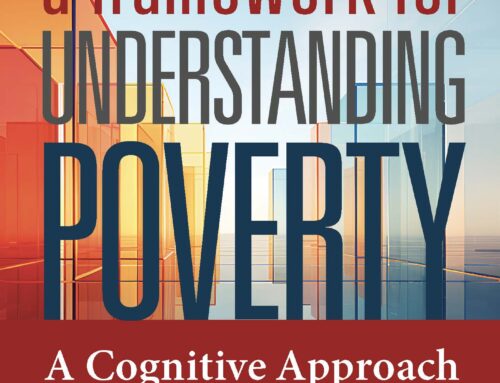
A Framework For Understanding Poverty
In my final days of education, I was privileged to be the principal of an elementary school with an 85% poverty rate.
In A Framework for Understanding Poverty, Dr. Payne‘s definition of poverty is “the extent to which an individual does without resources.” That was our first step. Each new school year we would assess the resources and document what we believed were the strengths and the deficits of each child at that time. Realizing that resources can be fluid, we visited this documentation frequently. But the point was, this helped us plan. This helped us know what would work. We understood the power of language and story, and we taught the children to speak in formal register and why it was important. Simultaneously, we taught the children to honor their own culture in reframing the possibility of two sets of rules: one set of rules for school, and possibly one set of rules for home.
We studied the hidden rules of each class thoroughly, and we adapted our conversations and behaviors accordingly. We also reinforced the need for mental models to demonstrate the abstract in what was a very concrete reality for our students. Within each student’s reality, we took every angle to help him or her develop a future story.
Emotional Poverty
Dr. Payne‘s four-point definition of emotional poverty guided us throughout the understanding of brain science. Emotional Poverty in All Demographics and Emotional Poverty, Volume 2: Safer Students and Less-Stressed Teachers are foundational for gaining useful information regarding research that anyone working with children needs. Children need to learn the basic structure of the brain and the development of the emotional self just as adults do, so educating them was also part of our initial steps within both of these books.
Throughout this study, we completely changed our approach to discipline, and we began diving deep into the emotional resources of each student. We also reviewed stages of development and compared them against the bonding and attachment style of each home. It helped us tremendously to understand that a child’s biological age may not, in fact, match his or her emotional age.
A critical juncture at this point was to look deep into our own emotional realities and face personal triggers that would lead to our own “unregulated brains.” We looked closely at our unique stage of life and how it was affecting our relationship with others. All of this work helped us to validate the emotional environment of each of our students and families. We had a better understanding of what to do, and as a result, we made more of a difference, and there was data to support our success.
Working with Parents
Parents are the primary external support system for a child. Parents also represent the community in which each student lives. Because parents’ voices need to be heard, it is critical to establish a mutual relationship of respect. Their ideas need to be listened to and acknowledged. Even though we see children daily, we only have them a third of the time, and research has determined that children do better when their parents are involved or at least supportive in what their children are doing at school.
In Working with Parents, Dr. Payne lists multiple ways to involve parents, and she even provides language phrases as examples. She also gives alternate approaches to talking with parents who are different from us. Especially important is the significance of emphasizing two sets of rules and never appearing judgmental or condescending.
She reminds us of the power of humor and teaches us to utilize story, with the good news folded in with the bad.
Likewise, in regard to affluent families, she presents solid strategies that are invaluable for successful communication and relationship building. Regardless of the background, parents must trust and believe you truly care about their child.
Currently, I am a registered play therapist and work two days a week in Indianapolis, and I continue to utilize these beliefs with children and their families. I will be forever grateful for Dr. Payne’s work and the ability to utilize it in my work.