 In almost every training offered by aha! Process, we talk about the importance of bridging and bonding social capital. Bonding capital is relationships with people who are like you and who you know and hang out with. Bridging capital is relationships with people who are different from you.
The importance of bridging social capital is that it connects you to people who are different from you, who have an expertise you might not have, who know other people that you don’t know, and who make connections. The more connections we have, the more opportunity we have for personal stability.
This in a large part is how Bridges Out of Poverty came to be. From 1979 to 1999, Phil DeVol was the executive director of a drug and alcohol treatment program. In this role, he spent time talking with other organizations and community partners about the work they provided. One such person just happened to be Ruby Payne’s mom, Alta, who was the wife of a pastor at a local church. Phil would go to Alta for various needs of his clients. One day, in 1995 or 1996, when picking up a baby crib, Alta also gave Phil a book her daughter had written. This book was A Framework for Understanding Poverty.
Phil used the ideas in the agency he ran—he conducted a client life cycle (which appears in Bridges) and made all sorts of changes to improve the work with people in poverty, including the way he engaged other agencies that they worked with. Coauthor Terie Dreussi-Smith’s input was in prevention education.
Moving forward, Ruby went to Phil’s office and asked how they were using her ideas.
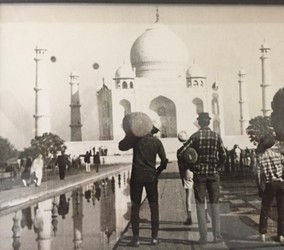
In Phil’s office, there was a photo on the wall of Phil and three other guys facing the Taj Majal. Ruby mentioned that her friend’s husband, Glenn, had also spent time in India. Phil stated that Glenn’s brother John was the guy standing to the left of him in the photo with the sleeping bag.
Are we talking about bridging social capital yet?
What happened next is that Ruby’s friend, Peggy Conrad, came on board the aha! Process team as the vice president of publications. She worked closely with Phil, Ruby, and Terie to begin the writing and publication process of what we know today as both the Bridges Out of Poverty book (now in its fifth edition) and the Bridges Out of Poverty model.
What a great example of bridging social capital.
What bridging social capital are you building today that might become the next big connection needed for your success tomorrow?
Learn more about Bridges Out of Poverty at www.ahaprocess.com.